Journal of Development Research

 Search
Rachna Singh1 and Anand Kishore Chaturvedi2
1 Department of Management Studies, Rajasthan Technical University, Kota, Rajasthan, India
2 Department of Mechanical Engineering, Rajasthan Technical University, Kota, Rajasthan, India

Creative Commons Non Commercial CC BY-NC: This article is distributed under the terms of the Creative Commons Attribution-NonCommercial 4.0 License (http://www.creativecommons.org/licenses/by-nc/4.0/) which permits non-Commercial use, reproduction and distribution of the work without further permission provided the original work is attributed.
A milk supply chain (MSC) is an operational framework that integrates dairy farmers, suppliers, milk outlets, retailers and users to deliver the milk from the producer to end users. Domestic consumption of milk from 17.0 million tonnes (MT) in the year 1950 increased to 221.6 MT in the year 2022−2023 (Department of Fisheries, Animal Husbandry Dairying, 2023). Now the Indian dairy Sector has become the largest milk production country across the globe. This article aims to review an in-depth analysis of the selected literature corpus, providing a better understanding of a subject domain. More than 300 articles or research papers were retrieved from various journals of production engineering, clinical and medical journals on pertinent topics through academic literature and publishers and were systematically studied and classified. It also gives better insights about publications concerning possible issues related to the number of themes, sub-themes covered in individual journals, future scope, the methodology adopted, number of methods used and publication trends. The literature suggests that milk intake helps prevent various health ailments, contrary to other non-epidemic diseases in humans. Inclusive authors discuss the literature on the trade-off between sustainability and risks or challenges in the MSC.
Milk supply chain, sustainable advantage, review of literature, non-epidemic diseases
Introduction
According to the annual report of the UN, Food and Agriculture Organisation (2022−2023), the Global ranking India procures the highest production of 24% this year. Since the 1970s, most of the expansion in milk production has been reported in South Asian countries, which mainly contribute to the growing economy of developing countries such as India, Pakistan and China, following developed nations as market leaders (FAO; DHAD, 2023) as seen in Figure 1.
Figure 1. Global Ranking of Indian Dairy Sector in Milk Production.
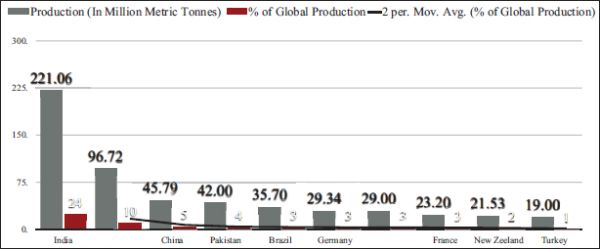
Source: Food and Agriculture Organisation Statistics, 7 February 2023; milk production across top ten countries world.
Historical Background
In the ancient times and Vedic age, past historical data is evident that the Indian subcontinent is an agro-based country where production and usage of milk as a food substitute begins from the oldest Indus Valley Civilisation c. 3300–c. 1300 bce, also mentioned in the Rigveda scripture in around 1700 bce.
Emergence of the Indian Dairy Sector
In the early years of independence, the Indian dairy sector recorded that milk production declined to 1.64% and 107 grams daily. Operation Flood, Known as the ‘White Revolution’, was initiated under the flagship of pioneer leaders such as Sardar Vallabhbhai Patel, Morarji Desai and Lal Bahadur Shastri, framed progressive policies and set up a National Dairy Development Board (NDDB) to curb down the monopoly of milk producers and exploitation of dairy farmers. Operation Flood aims to transform the milk deficiency era into the most prominent world milk producer until the 21st century.
Figure 2. Statistics on Milk Population per Capita Availability in India.
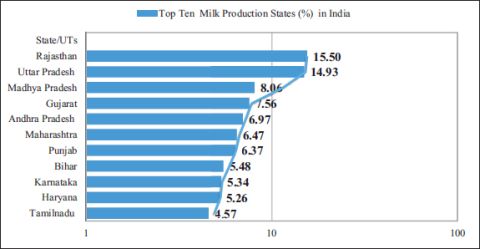
Source: FCCI Report 2022–2023; Department of Animal Husbandry, Fisheries and Dairying, GoI.
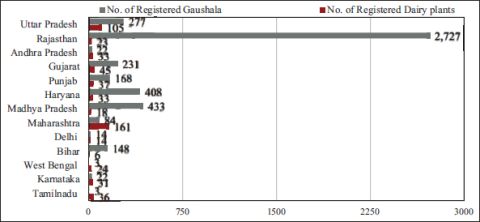
Figure 3. Statistics on Registered Milk Dairies/Companies and Gaushala in Major States.
Source: Animal Board of list of India, www.awbi.in; September 2022.
Present Scenario of Indian Dairy Sector
Milk and dairy enterprises are the significant sources of income in rural markets where the per capita level of milk availability reached a group of 444 grams of milk per person a day. Rapid urbanisation and remarkable growth in the disposable income of households, changing lifestyles, education level, infrastructure development, expansion of the rural market and technological advancement are some of the indicators that directly influence the production of milk and dairy products in the past few decades.
As seen in Figure 2, in the Indian dairy sector, Rajasthan has the highest percentage of milk production of 33 million tonnes (MT), followed by Uttar Pradesh and Other states (DHAD Report, 2022–2023), respectively.
Figure 4. Market Share of Leading Dairies in the Indian Dairy Sector.
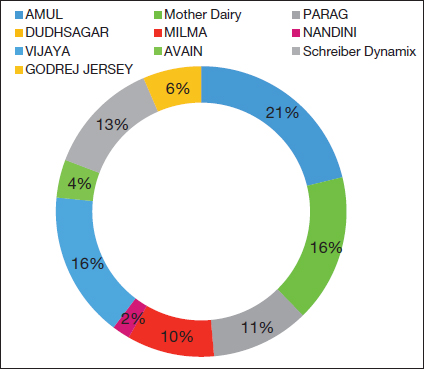
Amul started as a brand as a milestone in the history of the dairy sector in 1946. After independence, it became a market leader with an annual revenue of 6.5 million US$/year and 85% of the market share.
Indian milk supply chain (MSC) has immense potential and capabilities to diversify the product specification by adding value. Amul, Mother Dairy, Parag, MILMA and other prominent companies in the formal dairy sector. Milk is a raw product that transforms into other derivatives or substitute products like processed dairy items such as butter, cheese, ghee, buttermilk, condensed milk, cream and packaged milk.
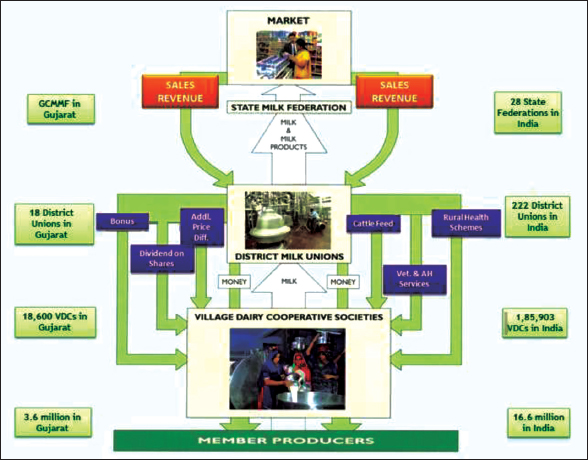
Organisation Structure of Indian Dairy Sector: Amul India
The organisation framework of the Indian dairy sector comprises a three-tier system: Village Society, District Society and State Federation as seen in Figure 4.
At a functional level, the dairy cooperative society (DCS) is formed by milk producers or farmers collecting the milk at a common platform to create groups and committed to selling milk only at the district level after becoming a member of the cooperative society. Each DCS acts as a milk collection centre, where members supply milk daily, and payment is made based on a percentage of fat and SNF per kg of the milk provided. Stakeholders of the cooperative societies received the annual profits incurred by the DCS.
The second level is the processing level, where producers or dairy processors form a union at the district level. This union is responsible for logistics and procurement activities in the MSC to create product value-addition. District union also provides a range of services to farmers, such as veterinary services, feed supplies, and services like artificial insemination to sustain growth in milk production.
At a state level, the cooperative milk producersʼ union is responsible for formulating marketing strategies for branding and labelling products, manufacturing feed for livestock, and other farming-supporting union activities.
Amul is the most trusted brand among Indian households. It started with the conscious movement to uplift the underprivileged section of society to transform their socioeconomic status. It also generates a job avenue and entrepreneurship in rural areas of India, such as Gujarat, Rajasthan and Maharashtra, where there is a scarcity of resources for livelihoods due to adverse climatic conditions.
The innovative and Visionary approach of Dr Verghese Kurien, Founder of Amul Dairy, commercialised, institutionalised, and technically supervised the processing of indigenous dairy products and launched them in the International and domestic markets to expand the Agro-food Industry.
Key Drivers of MSC and Dairy Processing
Indian dairy sector has the progressive growth in the past few decades, in India milk processing and supply chain activities are carried out at a local level of business model, where the gaushalas and milk cooperatives are the key players of unorganised dairy sector.
The total country milk production from milch animals is 137,365 million metric tonnes (MMT) and the total number of indigenous cows is about 26% among all breeds of milch animal species in India. From the national statistics ABI, 2022 as seen in Figure 5, Rajasthan is the highest milk production state with the highest number of registered gaushalas and dairies.
Literature Review
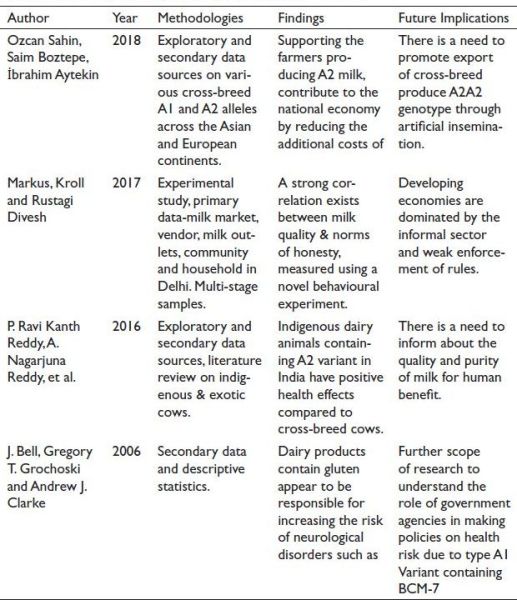
This article reviews and highlights the main theories explained in the dairy sector. It also explored topics and identified the gaps still existing in the literature. From the review, a taxonomy to determine which research stream would be most congruent to a specific research topic. Systematic literature review (SLR) can be performed by abstracting and indexing journals and published or unpublished bibliographies initially. Academic journals, conference proceedings, government reports and books must be tapped depending on the nature of the problem. The objective of SLR is also to evaluate the validity and quality of existing work against a criterion to reveal weaknesses, inconsistencies, and contradictions in existing MSC. Systematic Review in tabular format as seen in Table 1, is to understand the historical background of the Indian dairy sector and explore the segmentation of milk and dairy products.
Dairy Market and Farming Policies
In the global market, Business enterprises and the manufacturing sector are looking towards their core competencies to gain competitive advantage and manage their sources to evaluate internal and external value-adding activities.
Figure 5. Statistics on Registered Milk Dairies/Companies and Gaushala in Major States.
Source: Animal Board of list of India, www.awbi.in; September 2022.
The Indian dairy market is projected to expand from 124.93 billion to 227.3 billion in forthcoming years with a Compound Annual Growth Rate of 8.94% and valued at USD 115.57 billion in FY 2021–2022 (Kumar, 2014). Demographic composition of formal and informal Indian dairy sector and its Stakeholders is seen in Figure 6. India ranked lowest for affordable milk price with $0.70 litre daily, producing countries worldwide. Despite leading milk production, India has yet to become the world’s largest exporter. European countries have the largest market share in the world with flexible export subsidies contrary to the Government of India’s restricted export of milk powder and casein because of escalating the price of milk and dairy products in the indigenous market (Ramphul, 2012). Indian dairy farmers and producers proportionately belong to small and medium land size holders, and nearly 60% of dairy farmers engaged in the unorganised dairy sector, attributed to low-class income groups, rural households and conservative milking and farming processing (Squicciarini et al., 2017). Private dairy companies are nearly 17% as compared to registered cooperative societies in various states of India. MSC involves production, transportation, processing, packaging and storage as seen in Figure 5.
Sustainable Aspects of Dairy and MSC
Compared to other agro-business and processing sectors, MSC’s simple supply chain framework begins with raw milk collection from suppliers to end users. Sustainability is crucial in managing efficiently due to wastage and milk losses as products are perishable and have short life spans (Kazancoglu et al., 2018).
Table 1. Major Review of Published Articles/Research on Producer Perspective on Indian Dairy Sector and Indigenous Species in Milk Production.
Challenges and Risks Involved in MSC
Indian dairy and milk processing sector encountered a problem with disparities in infrastructure facilities, unfair trade practices, disproportionate market segmentation, quality aspects of product delivery system, high input dairy farming cost, logistics issues, dominance by key market players in the organised sector and low awareness among farmers and dairy processors (Kumar, 2014). The existing organised milk marketing structure needs to be upgraded to handle the resource availability and adoption of technological advancement in the breeding system of indigenous cattle species across the country with uniformity and consistent farming practices. Flourished states gain competitive advantage and sustainable economic development (Kale et al., 2016).
Figure 6. Organisational Structure of AMUL Dairy Sector.
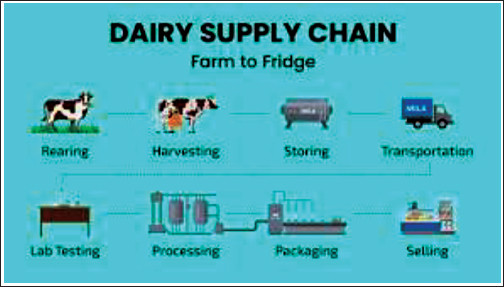
Source: Statistics on Gujarat Cooperative Milk Marketing Federation Ltd. (GCMF) ; AMUL INDIA, 2023.
Imbalances in Livestock Population and Its Production in MSC
According to the 20 livestock census year 2019, the population of total bovine species is 299.98 million, among which 193. Forty-six million are cattle and 109.85 million are buffalo. Out of the total population, with a hike of 5% annually and a total global share of 23.67%. The overall milk production of the cattle herd is higher than other bovine species, with a growth rate of 1.34 between 2012 and 2019. There is continuous milk production with various types of cattle species found in India adaptable to climatic conditions and sustainable towards health diseases across the country.
Milk: Health Impacts and Its Relevance as Food Constituent
Milk is considered an essential part of the regular diet and possesses high nutritional value and specific unique complex biological fluid, bioactive components such as proteins, lipids, carbohydrates, minerals and vitamins with multifaceted functionality in the gastrointestinal tract. In recent years, with the increasing demand for superior quality products and its brand value diversifying the customer expectations and satisfaction level in India, the usage of milk has been shifting from traditional dairy products to value-added and sustainable milk products.
Table 2. Statistics on Indian Demographic Population of Non-communicable Diseases; Dietary System and Lifestyle Pattern.
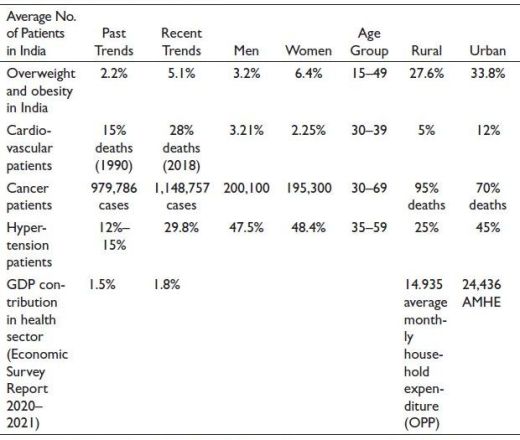
Source: ICMR Annual Report (March 2019–2020); Ministry of Health and Family Welfare Survey Report 2018–2019, Lancet 2019 Report, Economic Survey Annual Report 2020–2021, NCAER Report 2019.
Epidemiological research is evident that there is a substantial incremental growth in non-epidemic diseases such as obesity in children under the age of 14, diabetes, hypertension and Cardiovascular diseases, as seen in Table 2 due to sedentary lifestyles and poor dietary system, in milk and dairy products, the tractability of hardness chemical composition and bacterial formation due to low freezing points incidents the problem of adulteration and contamination (Hoque & Sukanta, 2019).
Consumer Pattern and Preferences
Consumption of milk and dairy products is attributed to their nutritional value and healthy lifestyle. Awareness and perceptions of essential items and dairy products depend upon their quality, price and consumption level. Income, education and social class are some observed demographic characteristics influencing buying patterns.
Figure 7. Demographic Proportion of Indian Dairy Sector.
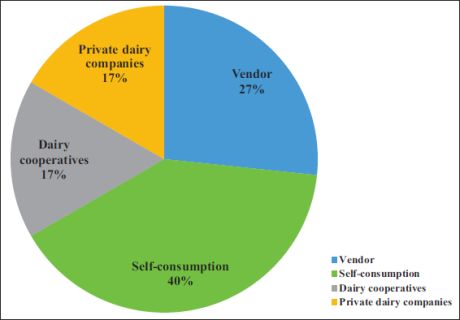
Source: Ministry of Agriculture and Farmers GoI; Indian Dairy Products Reports, June 2019–2020.
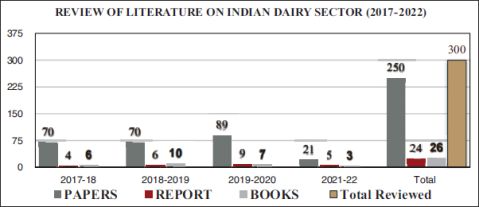
Figure 8. Graphical Representation in Chronological Order of Review of Literature on Indian Dairy Sector from 2017 to 2022.
Cow milk and dairy products possess health benefits, are helpful in nourishment, strengthen bones and teeth, and boost immunity. Individuals’ consumption patterns depend on their choice and preferences for specific products and services despite their health benefits. Different age groups have different food intake levels and reinforcement focusing on milk and dairy products. Packaging and promotional activities also influence the buying patterns among other age groups. Quality of milk and cost-effectiveness stimulate product demand and increase the consumer base.
Motivation for Research
This study contributed to the proposition in the present context for food constituents and the assertion about the dairy and food processing industry. This study draws attention to the sustainable aspect in the MSC for understanding the Consumption and Production pattern. With the help of a SLR, it develops deep insights into the current research within MSC management and contributes to the wellness of mankind.
Theoretical Framework
Theoretical framework is based on existing theory that describes the constructs, principles, concepts and research perspective. In the context of this study, some of the behavioural theories has been explained as follows:
The theory of planned behaviour (TPB) is important to understand the role of decision-making ability of an individual. It also acts as an effective tool to make choices among various alternatives in a planned manner influenced by past experiences and future expectations of an individual. This theory explains the cognitive factors such as motivation, attitude and purchase intention of milk consumers.
Research Design/Methodology/Approach
This article examines reviewed and peer-reviewed academic journals from 2000 to 2019 on a systematic approach for conducting an extensive literature review to discover knowledge about indigenous cow milk through three philosophical assumptions; ontology, epistemology and axiology.
This article investigates and reviews the literature available from journals (reviewed/peer-reviewed) articles, case studies, surveys and annual reports on agriculture and dairy sector of concerned statutory bodies and agencies in Indian context. Data sources are gathered from published information from various databases and research search engines. For this paper review of literature (ROL) explores the period of 2017–2022, and includes a total of 300 papers It helps to identify theoretical and methodological gaps in the ROL.
Discussion
From the previous literature it is evident that milk is considered a wholesome diet and an essential part of human dietary and lifestyle patterns. Milk and its derivative products are applicable for the treatment of various health ailments. Challenges encountered in MSC are to ensure delivery of qualitative milk and value-added products to customers. providing better infrastructure for milk collection and logistics systems. Indian dairy is an agro-based business sector, whose primary functions and economic activities are performed by union and state governing bodies under the Ministry of Agriculture contributing to 26% of total agriculture growth domestic product (GDP).
Government initiated various Dairy Development Schemes (DDS) to boost the dairy farmers /processors to develop better pre- and post-harvest agribusiness infrastructure that facilitates better and qualitative products, procurement and logistics facilities to maintain an efficient supply chain. Government also promotes start-ups and digital programmes schemes as per farmers’ needs at local and national levels.
Operational and functional activities of MSC in contrast to its risks and key drivers involved in MSC. It is important to understand the issues related to hygiene and maintenance of dairy farms, protection of milch animals and cattle species. Adoption of better Supply Chain Management Practices (SCMP) and ensure their role in increasing the production level. Formulation of stringent policies and guidelines to maintain the quality standards for the implementation and effectiveness of government DDS.
Findings and Conclusion
The literature review addresses some significant issues in the milk and dairy supply chain based on the fast chain model, which is directed towards the logistics and procurement activities in business processes. Quality and safety for processing milk and dairy products along a supply chain stage depend upon perishability and optimum utilisation of resources at the preceding step. Consumers’ willingness to pay depends on the quality, price, health and safety aspects of milk and dairy products. The availability of local dairy products in informal markets requires the development of efficient mechanised systems and low-cost packaging solutions to increase their shelf life and make them price-competitive. Stakeholders should sanitise themselves about technological advancement in agribusiness to boost the economy in organised and unorganised sectors. They must invest more in research to develop new dairy products for domestic and global markets. Government financial support for innovative techniques is required to establish efficient processing capabilities to minimise losses and reduce the carbon footprint in this dairy processing industry.
Declaration of Conflicting Interests
The authors declared no potential conflicts of interest with respect to the research, authorship and/or publication of this article.
Funding
The authors received no financial support for the research, authorship and/or publication of this article.
ORCID iD
Rachna Singh https://orcid.org/0000-0002-4724-8199
Hoque, M., & Sukanta, M. (2019). Safety of milk and dairy products. Food Safety and Human Health, 5, 127–143.
Kale, R.B., Ponnusamy, K., Chakravarty, A.K., Sendhil, R., & Mohammad, A. (2016). Assessing resource and infrastructure disparities to strengthen Indian dairy sector. Indian Journal of Animal Sciences, 86(6), 720–725.
Kanth Reddy, R., Nagarjuna Reddy, A., Ramadevi, A., & Srinivas Kumar, D. (2016). Nutritional significance of indigenous cow milk with regard to A2 ℬ-casein—An overview. International Journal of Science, Environment and Technology, 5(5), 3376–3380.
Kazancoglu, Y., Ozkan-Ozen, Y.D., & Ozbiltekin, M. (2018). Minimising losses in milk supply chain with sustainability: An example from an emerging economy. Resources, Conservation and Recycling, 139, 270–279. https://doi.org/10.1016/j.resconrec.2018.08.020
Kumar, R. (2014). Dairy supply chain management (DSCM) practices: An imperative solicitation. American Journal of Nutrition and Food Science, 1(2), 17–24. http://10.12966/ajnfs.04.01.2014
Ramphul, O. (2012). Global competitiveness of Indian dairy sector. Electronic Journal, 59(5), 215–223. http://dx.doi.org/10.2139/ssrn.2797987
Squicciarini, M.P., Anneleen, V., Janssen, E., & Jo, S. (2017). Supply chains and economic development: Insights from the Indian dairy sector. Journal of Food Policy, 68, 128–142. http://dx.doi.org/10.1016/j.foodpol.2017.01.003
Susanty, A., Puspitasari, N.B., & Prastawa, H. (2020). Exploring the best policy scenario plan for the dairy supply chain: A DEMATEL approach. Journal of Modelling in Management, 189, 285–291. http://dx.doi.org10.1108/JM2-08-2019-0185
